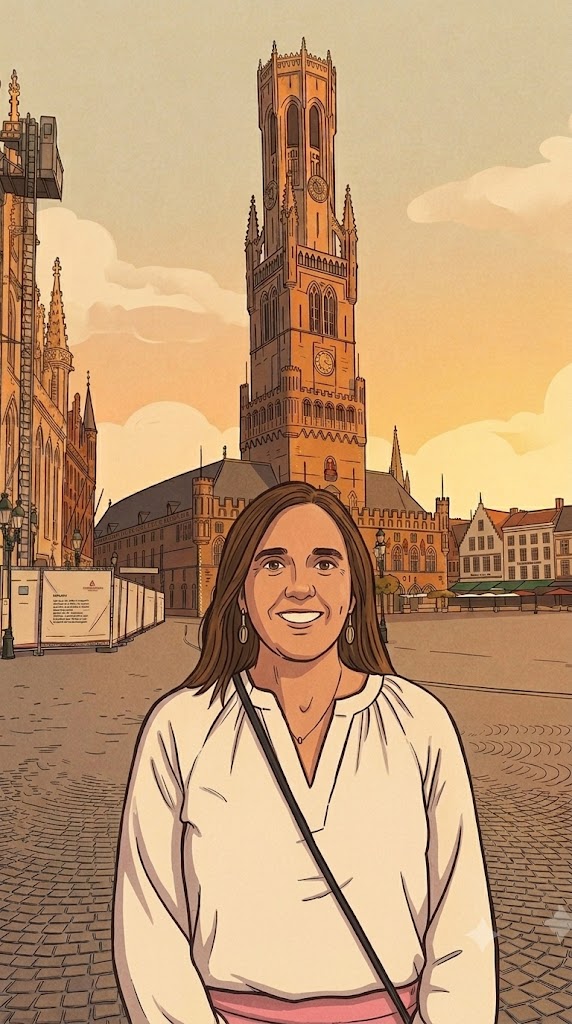
Hidden Gems in Bruges
The Secret Side of Bruges Most Visitors Never See
Millions of visitors come to Bruges every year. Most of them see the Markt, climb the Belfry, buy a box of chocolates, and leave believing they have seen the city. They have not. The real hidden gems in Bruges are not locked away or difficult to reach — they are simply one quiet turn off the main streets, tucked behind low wooden gates and down narrow alleys that the crowds walk past without a second glance. As a local guide who walks these backstreets every day, I can tell you that the Bruges I fell in love with lives in these overlooked corners, not on the postcards.
What makes these secret spots so special is that they are not reconstructions or tourist attractions. They are the living, breathing city as it has existed for centuries — courtyards where residents still tend their flower boxes, canals where swans drift past medieval timber facades, and cobblestone lanes so narrow that the sound of church bells is the only thing that reaches you. Finding them on your own is possible, but knowing which gate to push open, which alley to follow, and which story belongs to which wall — that is where walking with someone who knows every stone makes all the difference.
The Godshuizen: Bruges Best-Kept Medieval Secret
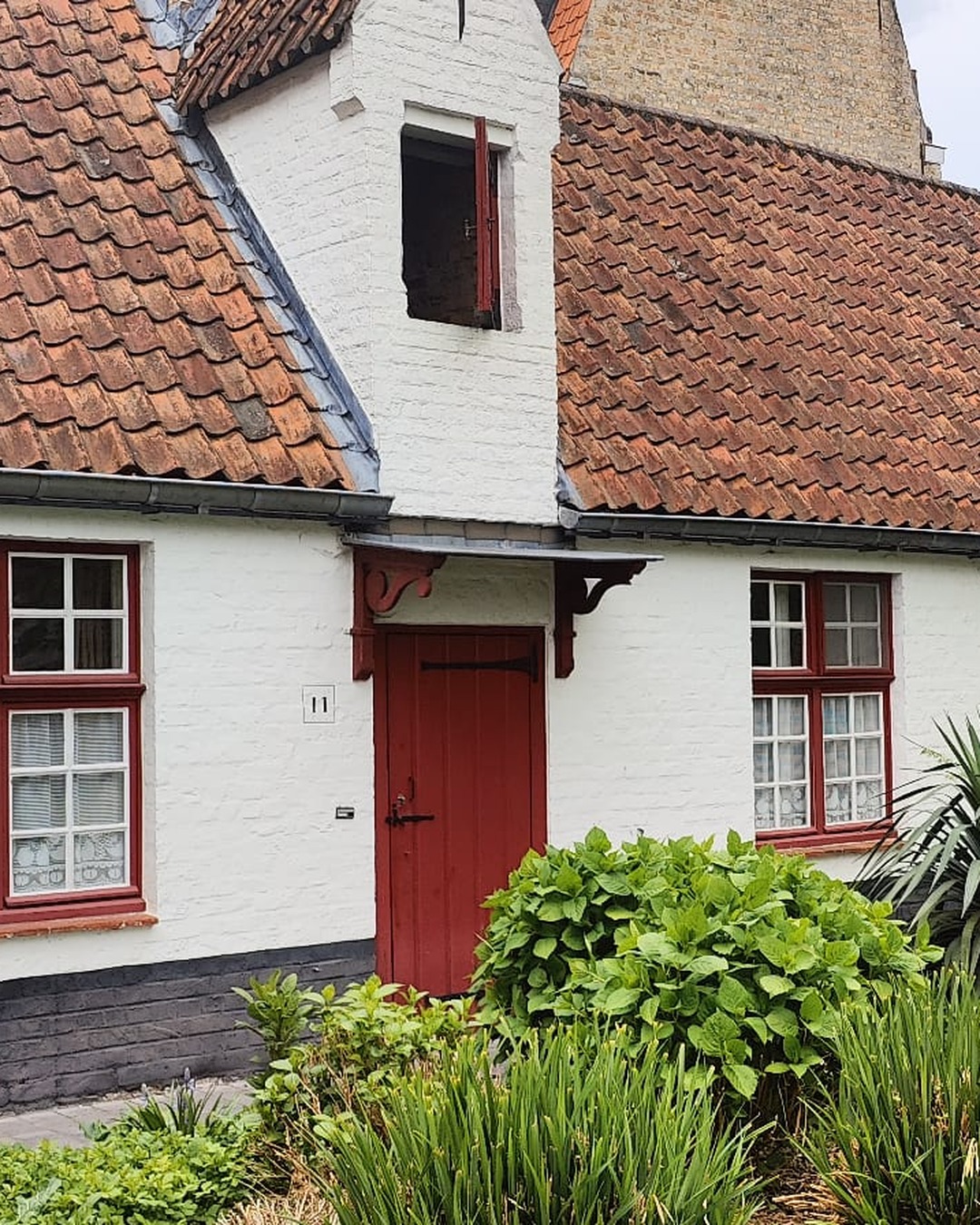
If I could show every visitor just one hidden gem in Bruges, it would be the Godshuizen — the medieval almshouse courtyards scattered quietly throughout the city. Built from the fourteenth century onward by wealthy merchants, guilds, and noble families, these clusters of tiny whitewashed houses were designed to shelter the elderly and the poor. What makes them extraordinary is that many are still inhabited today, which is precisely why they have remained so tranquil and unchanged. Step through a low wooden door on an ordinary-looking street, and you enter a miniature world of manicured gardens, lace curtains, and absolute silence.
There are over forty Godshuizen in Bruges, yet the vast majority of visitors never see a single one. The Godshuis de Vos on the Noordstraat, the Godshuis De Meulenaere near the Augustijnenrei, and the courtyards along the Nieuwe Gentweg are among my personal favourites. Each has its own character and history, and each offers that same remarkable feeling of stepping outside time. On our Hidden Backstreets Tour, these courtyards are consistently the moment when guests fall quiet, look around, and whisper: I had no idea places like this existed.
Augustijnenrei: The Canal That Time Forgot
Everyone photographs the Rozenhoedkaai — and rightly so, it is beautiful. But if you walk ten minutes north from the busy centre, you will reach the Augustijnenrei canal, and I promise you the view there will stop you in your tracks. Medieval wooden facades lean gently over water so still it looks like glass. Ivy climbs the brickwork. Swans glide past in pairs. There are no souvenir shops here, no crowd barriers, no selfie sticks — just centuries of quiet beauty that has somehow been overlooked by the modern world.
The houses along the Augustijnenrei are among the oldest in Bruges, some still bearing their original timber frames from before brick became the standard building material. This neighbourhood was once the commercial heart of the city, where ships from across Europe docked to trade wool, wine, and spices. Jan Van Eyck himself lived and worked just steps from here, and his statue still stands on the nearby Jan Van Eyck Square — the very square where our walking tours begin. Most visitors cross this plaza without realising they are standing in what was once the busiest harbour in northern Europe. Understanding that history transforms the way you see every canal and cobblestone around it.
How to Discover the Bruges That Hides in Plain Sight
The question I hear most often from visitors is deceptively simple: how do I get away from the crowds? The answer is that it is remarkably easy — if you know which turns to take. Bruges was built as a medieval maze of narrow alleys, concealed courtyards, and quiet waterways designed for commerce and privacy. That original street plan survives almost entirely intact, which means the hidden gems are not carefully preserved museum pieces. They are the city exactly as it was meant to be, simply waiting for you to wander in the right direction.
Hidden Courtyards and Nameless Side Streets
The secret to finding these places is to resist the gravitational pull of the main routes. Instead of following the flow of visitors from one famous square to the next, turn into the side streets that have no signs and no names you recognise. Peer through half-open gates. Follow a canal towpath until it narrows into a footpath between garden walls. This is where Bruges reveals itself — in courtyards where fig trees grow against old brick, in stretches of canal where the only sound is birdsong, and in passageways so narrow that two people can barely walk abreast.
Some of my favourite moments as a guide happen in these nameless corners. A guest will spot a carved stone date above a doorway and ask what it means. Another will notice the faint outline of a painted house sign from the sixteenth century. These details are everywhere once you learn to look for them, and they tell the story of a city that was once one of the wealthiest and most cosmopolitan places in Europe. The hidden gems in Bruges are not just pretty — they are windows into a history that most visitors never suspect is there.
Walk With Someone Who Knows Every Cobblestone
You could absolutely spend an afternoon wandering these backstreets on your own, and you would stumble upon beautiful things. But there is a difference between stumbling upon a courtyard and understanding why it was built, who lived there, and what happened within its walls. A local guide does not just show you the hidden spots — she gives them meaning. She knows which wooden gate leads to a fifteenth-century garden, which bridge offers a view that even most residents have never seen, and which quiet lane was once the scene of a medieval scandal that changed the city forever.
Our Hidden Backstreets Tour was designed specifically to reveal this secret side of Bruges. In two hours, we take you through the alleys, courtyards, and canals that most visitors walk straight past — with all the stories, history, and personal details that make each place come alive. Small groups of no more than eight people mean it feels less like a tour and more like exploring the city with a friend who happens to know every hidden corner. If you want to see the Bruges that lives beyond the guidebooks, come walk with us.